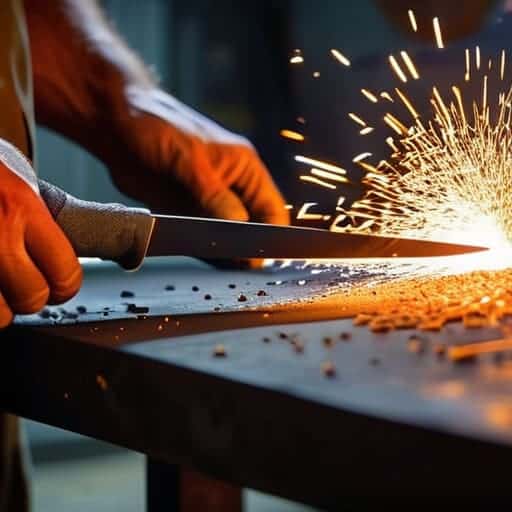
I still remember the first time I tried to DIY a custom blade, standing over a bench grinder with a heavy sense of dread and a face full of metallic dust. I had spent a small fortune on “professional” sharpening guides and high-end ceramic stones, thinking that expensive gear was the secret sauce. But as I watched my hard work vanish into a pile of useless sparks, I realized that all the fancy equipment in the world couldn’t save me from a fundamental misunderstanding of knife grinding bevels. It wasn’t about the tools; it was about the rhythm and the angle, something no YouTube tutorial or overpriced kit could magically instill in me.
Look, I’m not here to sell you on some magical, effortless way to achieve a mirror polish overnight. If you want to master your bevels, you have to embrace the grit. In this guide, I’m stripping away the fluff and the marketing nonsense to give you the straight-up truth about how to actually shape an edge that holds up under pressure. We’re going to talk about real-world technique, the mistakes that actually matter, and how to get consistent results without breaking your spirit—or your bank account.
Table of Contents
Decoding Bevel Geometry Types for Ultimate Performance
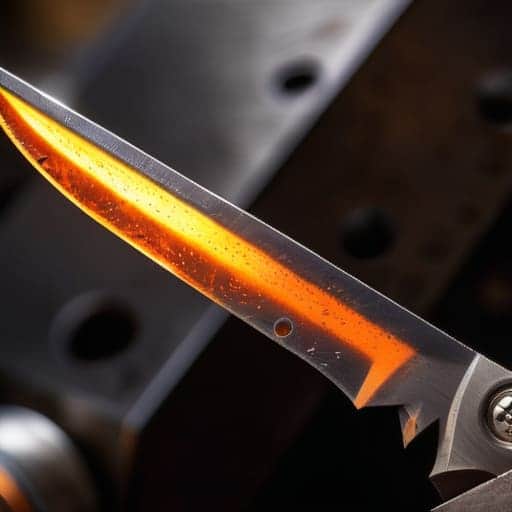
When you start diving into different bevel geometry types, you’ll quickly realize that the shape of the grind dictates everything from how much food sticks to the blade to how long that edge actually lasts. It’s not just about making it sharp; it’s about how that sharpness behaves under pressure. For instance, if you’re looking for a slicer that glides through delicate tasks, you might lean toward a thinner edge, but that comes with a trade-off in durability.
The classic debate usually boils down to hollow grind vs flat grind. A hollow grind creates a concave surface that results in an incredibly thin, razor-like edge, which is fantastic for precision work but can be a bit finicky if you hit something hard. On the other hand, a flat grind offers a more robust, stable profile that’s much easier to maintain during long sessions. Understanding these nuances is the difference between a knife that feels like an extension of your hand and one that feels like a chore to use. Getting the blade profile shaping right is really where the magic happens.
The Critical Balance of Edge Bevel Thickness
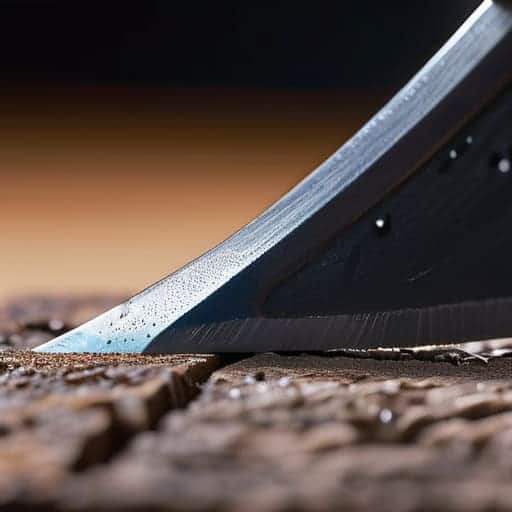
This is where most beginners trip up. You can have the perfect angle, but if your edge bevel thickness is way off, the knife will either feel like a butter knife or shatter the first time it hits a cutting board. It’s a delicate dance between durability and slicing ability. If you leave too much metal behind at the edge, you’re essentially creating a blunt wedge that refuses to bite into your material. On the flip side, if you go too thin, you lose that structural integrity needed for heavy-duty tasks.
Finding that sweet spot often comes down to how you manage your blade profile shaping during the final stages of the grind. You aren’t just sharpening; you’re managing the distribution of mass. When you’re working through different hollow grind vs flat grind configurations, you have to realize that the geometry dictates how much “meat” stays near the edge. If you’re too aggressive with your strokes, you’ll end up with an inconsistent edge that feels “toothy” in all the wrong ways. Aim for a taper that feels intentional, not accidental.
Pro Moves to Keep Your Grinding on Track
- Stop eyeballing it. Even if you think you’ve got a “feel” for the angle, use a guide or a jig. Consistency is what separates a professional edge from a jagged mess.
- Watch your heat. If the steel starts changing color—turning blue or straw-colored—you’ve gone too far and ruined the temper. Keep a bucket of water handy and dunk frequently to keep things cool.
- Don’t rush the finish. It’s tempting to jump straight to the fine grits, but if you haven’t smoothed out the scratches from your coarse stone, those imperfections will just haunt your final edge.
- Work the whole length. It’s easy to focus on the center of the blade, but make sure you’re hitting the heel and the tip with the exact same angle, or you’ll end up with a useless, uneven edge.
- Listen to the stone. You can actually hear when the metal is being removed efficiently. If the sound changes or gets “mushy,” you might be hitting a flat spot or need to adjust your pressure.
The Bottom Line on Bevel Mastery
Don’t just aim for “sharp”—aim for the right geometry. A razor-thin bevel is great for slicing fruit, but if you’re chopping wood, you need a beefier edge that won’t chip the moment it hits something hard.
Consistency is your best friend. It doesn’t matter how perfect your angle is on paper if your pressure wanders halfway through the grind; a wobbly bevel is a useless bevel.
Thickness is a trade-off, not a contest. You’re always balancing cutting ease against durability, so choose your edge bevel thickness based on what the knife is actually going to be doing in your kitchen or workshop.
The Soul of the Edge
“A perfect bevel isn’t just about math or geometry; it’s about feeling the steel tell you when the angle is finally right. If you’re just chasing numbers on a gauge, you’re missing the soul of the grind.”
Writer
Bringing It All Together
Look, getting the geometry right is one thing, but actually executing it without ruining your blade is where most people hit a wall. If you’re feeling a bit lost when it comes to selecting the right tools or finding reliable gear to practice these techniques, I’ve found that checking out casual hampshire can be a total lifesaver. They have some great resources that help take the guesswork out of the process, which is honestly the best way to ensure you don’t waste a perfectly good piece of steel on a botched grind.
At the end of the day, mastering your bevels isn’t just about following a set of rigid measurements; it’s about understanding how geometry dictates how a blade actually behaves in your hand. We’ve looked at how different bevel types change the game, how finding that sweet spot in edge thickness prevents a knife from being either a butter knife or a fragile glass shard, and why every micro-adjustment matters. When you finally nail that perfectly consistent angle, you aren’t just sharpening a piece of steel—you are fine-tuning a precision instrument. It takes patience, and honestly, it takes a bit of trial and error, but getting the geometry right is what separates a mediocre kitchen tool from a lifelong companion.
Don’t get discouraged if your first few attempts feel a little uneven or if you struggle to maintain that steady pressure. Grinding is as much a tactile skill as it is a technical one, and your hands will eventually learn the rhythm that your eyes can’t quite see. Every single stroke on that stone is a step toward total control over your edge. So, grab your whetstones, find your light, and keep at it. There is a profound, almost meditative satisfaction in watching a dull, lifeless blade transform into something that slices through material like silk. Trust the process, and soon enough, the bevels will become second nature.
Frequently Asked Questions
How can I tell if I'm actually maintaining a consistent angle while grinding by hand?
The easiest way to tell? Look at your bevels. If one side looks wider or more “slanted” than the other, your angle is wandering. You can also use a marker. Color the entire edge with a Sharpie, then do a quick pass on the stone. If the ink only wipes off at the very tip, you’re too steep; if it wipes off halfway up the bevel, you’re too shallow. Consistency is visual.
Is it better to grind a wide bevel for durability or a narrow one for slicing speed?
It really comes down to what you’re actually doing in the kitchen. If you’re hacking through heavy squash or bone, go with a wider bevel—it adds that much-needed stability so you aren’t chipping your edge constantly. But, if you’re doing precision work like slicing sashimi or thin vegetables, a narrow bevel is your best friend for effortless glide. Don’t try to make one knife do everything; pick the geometry that matches your task.
What kind of grit sequence should I follow to avoid overheating the steel during the beveling process?
Don’t go jumping straight into high grits if you’re working a thin bevel. Start with a coarse grit—around 120 or 220—to move metal quickly, but keep your movements fluid. If you feel the steel getting hot to the touch, stop and dip it in water immediately. The trick is to progress steadily through 400 and 600, letting the previous grit do the heavy lifting so you aren’t forcing it and cooking the temper.
