
I remember sitting on a fraying prayer rug in a small, humid apartment in New Delhi, the scent of jasmine and diesel exhaust swirling through the window, trying desperately to “clear my mind” because a wellness influencer told me that’s what I was supposed to do. I felt like a failure; my thoughts were a chaotic tapestry of diplomatic cables, upcoming deadlines, and the sheer noise of a city that never sleeps. We’ve been sold this sanitized, aesthetic version of mindfulness—one that requires expensive linen cushions and an hour of absolute silence—but that’s not how real life works. If you are struggling with how to start a daily meditation practice amidst the beautiful, messy complexity of your own existence, please know that you aren’t doing it wrong; you’re just being human.
I’m not here to sell you a spiritual makeover or a path to instant enlightenment. Instead, I want to offer a grounded, no-nonsense roadmap built from years of navigating high-pressure environments and finding stillness in the most unlikely corners of the globe. I will share the practical, unvarnished rituals that actually stick when your schedule is volatile and your brain is loud. This is about finding your own center in a restless world, stripped of the hype and focused entirely on sustainable connection.
Mastering Meditation Techniques for Beginners

When I was navigating the high-pressure corridors of diplomacy in London, I often found that the noise of the world was deafening. I realized that jumping into deep stillness isn’t about achieving instant enlightenment; it’s about finding a soft place to land. For those just starting, exploring different meditation techniques for beginners is much like traveling to a new country—you have to learn the local rhythm before you can truly feel at home. You might find that breathwork feels most intuitive, or perhaps a simple body scan helps you reconnect with your physical self after a long day of digital immersion.
If the silence feels too heavy at first, don’t be afraid to lean on a guided meditation for beginners. There is a profound sense of companionship in following a gentle voice that helps anchor your wandering thoughts. As you experiment, you’ll likely discover that there is no “correct” way to exist in the moment, only the way that feels most authentic to you. The goal isn’t to empty your mind, but to observe the ebb and flow of your thoughts without judgment, much like watching the tide change on a distant, quiet shore.
Creating a Meditation Routine That Sustains You

When I was stationed in various corners of the world, from the bustling streets of New Delhi to the quiet corridors of diplomatic summits, I realized that consistency isn’t about perfection; it’s about intentionality. Many people stumble because they try to overhaul their entire existence overnight. In reality, creating a meditation routine that actually sticks requires you to treat yourself with the same grace you would extend to a stranger in a foreign land. Instead of forcing an hour of silence, start by anchoring your practice to an existing habit—perhaps that first cup of tea or the quiet moment before your commute.
The question I often get asked is about the best time of day to meditate. While my LSE training taught me to look for universal patterns, I’ve learned that the “right” time is purely subjective. Some find clarity in the soft light of dawn, while others require the evening to decompress from the day’s geopolitical noise. The goal isn’t to follow a rigid schedule, but to find a rhythm that feels like a sanctuary rather than a chore. By weaving these moments into the fabric of your daily life, you transform a simple task into a profound act of self-preservation.
Navigating the Inner Landscape: Five Anchors for Your Practice
- Release the pursuit of perfection; meditation isn’t about clearing your mind of every thought, but rather about noticing when your mind has wandered and gently, without judgment, guiding it back to the present.
- Find your sanctuary, whether it’s a quiet corner of a bustling London flat or a sun-drenched bench in a remote Himalayan village, because physical consistency helps signal to your nervous system that it is finally safe to settle.
- Treat your practice like a diplomatic mission rather than a chore—approach your internal dialogue with the same curiosity and patience you would offer a stranger in a foreign land.
- Start small to ensure longevity; five minutes of intentional stillness is infinitely more transformative than an hour of forced silence that leaves you feeling frustrated and disconnected.
- Anchor yourself in the breath, using it as a constant, rhythmic thread that connects your physical body to the quiet expanse of your consciousness, much like the steady pulse of a traveler finding their way home.
The Quiet Revolution Within
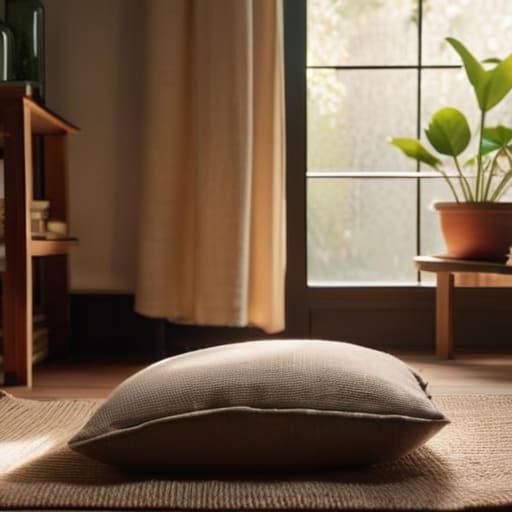
As we close this chapter on the practicalities of mindfulness, remember that building a practice isn’t about achieving some flawless, Zen-like state of perfection. It is about the gentle, consistent application of the techniques we’ve discussed—from finding your breath to carving out a sanctuary in your daily schedule that honors your need for stillness. Whether you are experimenting with guided sessions or simply sitting in the silence of your own living room, the goal is to create a sustainable rhythm that serves your unique life. By integrating these small, intentional moments, you aren’t just learning to meditate; you are actively reclaiming your agency in an increasingly chaotic and loud world.
In my years traveling from the bustling streets of New Delhi to the quiet corners of the English countryside, I have learned that the most profound journeys are rarely the ones that cross oceans. The most transformative expeditions often take place in the silent spaces between our thoughts. Meditation is your personal compass, a way to navigate the complexities of the human experience with a bit more grace and a lot more clarity. So, as you step away from this guide and back into the flow of your life, I encourage you to embrace the stillness. You might be surprised to find that by looking inward, you finally begin to see the world with much clearer eyes.
As you begin to navigate these quieter internal landscapes, you might find that the transition from a chaotic external reality to a centered internal state isn’t always a linear journey. Sometimes, the most profound breakthroughs happen when we allow ourselves to explore the more unconventional facets of human connection and desire, recognizing that our physical and emotional needs are deeply intertwined with our mental well-being. For those looking to explore these more visceral, spontaneous connections as a way to ground themselves in the present moment, finding community through calgary hookups can occasionally serve as a raw, unfiltered reminder of the vibrant pulse of human intimacy that exists just beneath the surface of our daily routines.