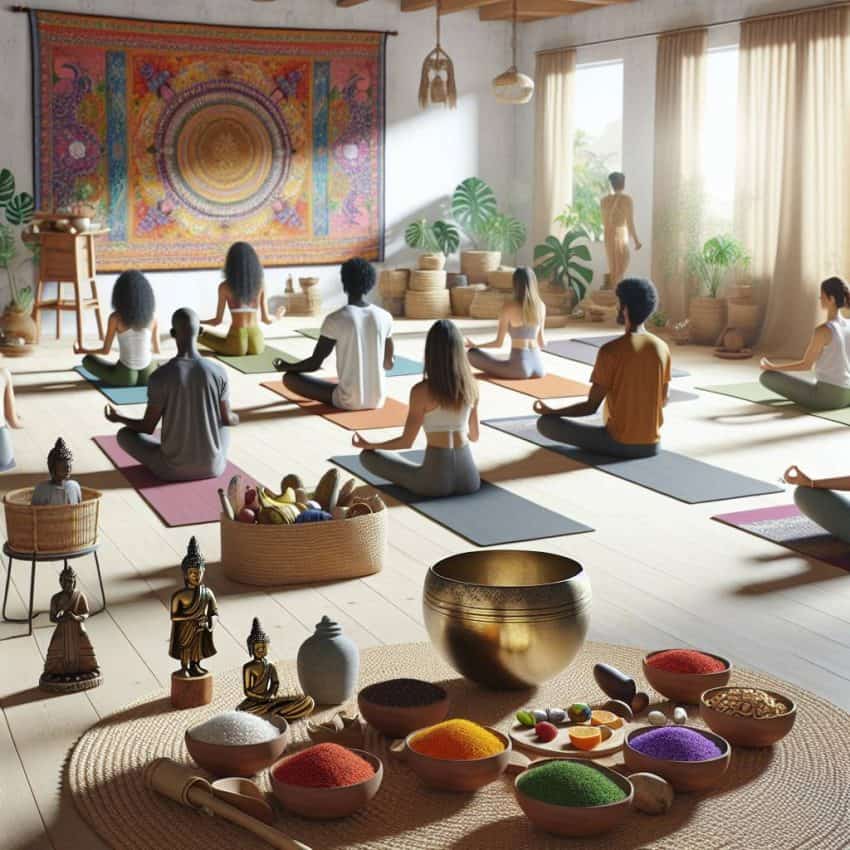
I once found myself tangled up in a bizarre mashup of a yoga class that promised “authentic” spiritual enlightenment with a side of Tibetan singing bowls and Brazilian superfood smoothies. Sound familiar? It should. Because let’s be honest, what was supposed to be a journey into mindfulness ended up feeling like a chaotic cultural potluck. I left that class more confused than calm, wondering if I’d just participated in a wellness-themed episode of “Where in the World Is Carmen Sandiego?
But you’re here for more than my misadventures in fusion fitness. You want the real deal—no fluff, no pretense. This article will cut through the superficiality of the multicultural wellness industry to uncover the roots and realities of these practices. We’ll explore how traditions from around the globe can inspire genuine well-being without turning into a commercialized circus. So, buckle up. It’s time to peel back the layers and see these practices for what they truly are, beyond the Instagram filters and marketing pitches.
Table of Contents
From Grandma’s Herb Cabinet to a Global Bazaar of Traditions
Picture this: a dusty, creaky cabinet in your grandma’s kitchen, brimming with jars of dried leaves, roots, and petals. Each one with a story, a remedy, a piece of wisdom passed down through generations. This isn’t just a quaint, nostalgic scene; it’s where true wellness begins—rooted in tradition, grounded in authenticity. Now, fast forward to today, where these age-old practices have exploded into a global bazaar, a vibrant tapestry of cultural exchanges. It’s not just about finding the next turmeric latte trend; it’s about understanding the lineage and respecting the heritage behind these traditions. It’s about the wisdom of Ayurveda meeting the ancient whispers of Native American healing and the meticulous precision of Traditional Chinese Medicine.
We’ve turned the globe into our personal wellness catalogue, cherry-picking what suits our fancy while often ignoring the rich contexts these practices are steeped in. Sure, a yoga class might seem like a blend of postures and breathing techniques, but behind it lies a philosophy that’s been cultivated over millennia. It’s a spiritual journey, not just a fitness routine. The global bazaar of wellness traditions offers a mind-boggling array of inspiration—if only we take the time to truly listen. So, when you sip that matcha or practice that Tai Chi, remember: these aren’t just wellness fads. They’re stories, histories, and cultures woven into the fabric of humanity. Treat them with the respect they deserve.
The Unvarnished Truth
Stealing bits of wisdom from every corner of the globe doesn’t make us enlightened; it just makes our ignorance look exotic.
The Final Bow of Cultural Appropriation
So here’s where I stand. Multicultural wellness isn’t just a kaleidoscope of exotic teas and incense sticks. It’s a mirror reflecting our ravenous appetite for the ‘new’ and ‘unique’. But ripping traditions from their roots and slapping them onto our daily routines doesn’t make us enlightened. It makes us consumers in a global marketplace, wearing borrowed cultures like a fashion statement. And let’s be real, the allure of the global bazaar can be blinding.
But then, there’s inspiration—the genuine kind. The sort that makes you sit up and question why you’ve been sipping on matcha without understanding its heritage. When done right, exploring these wellness practices can be more than just a hollow ritual. It can be a journey of respect and understanding, a way to genuinely connect with the world beyond your doorstep. So, let’s not just borrow these traditions. Let’s honor them, learn from them, and maybe, just maybe, find a little more clarity in this chaotic world.
